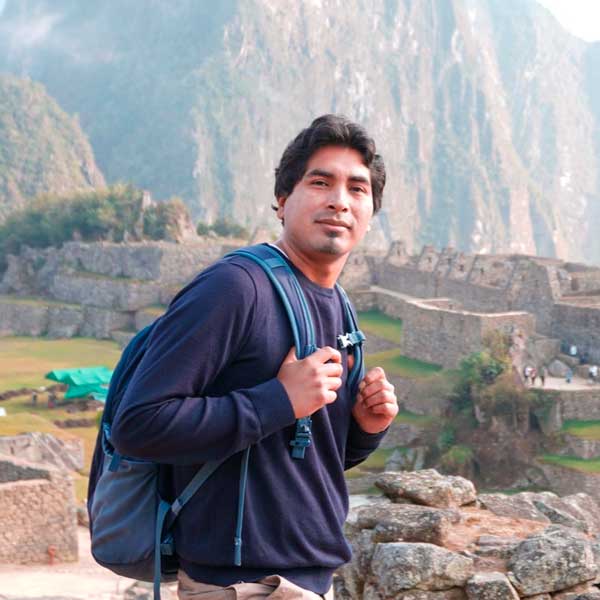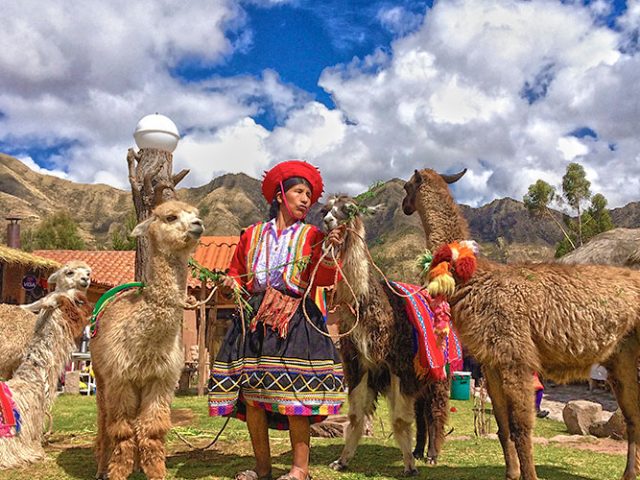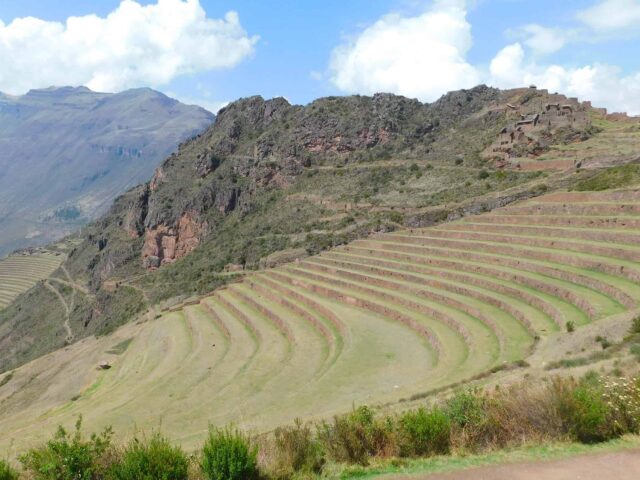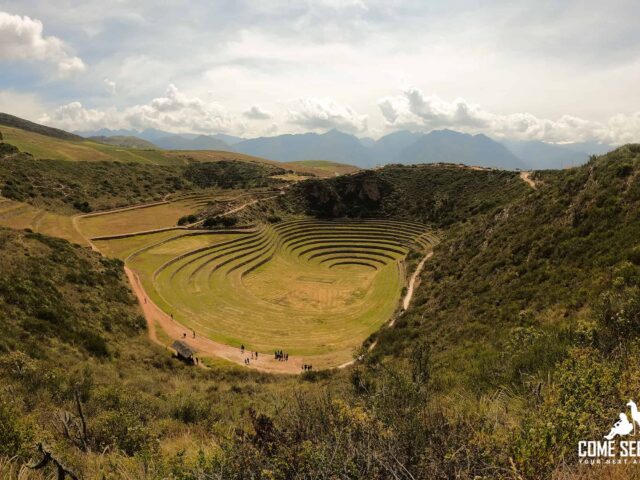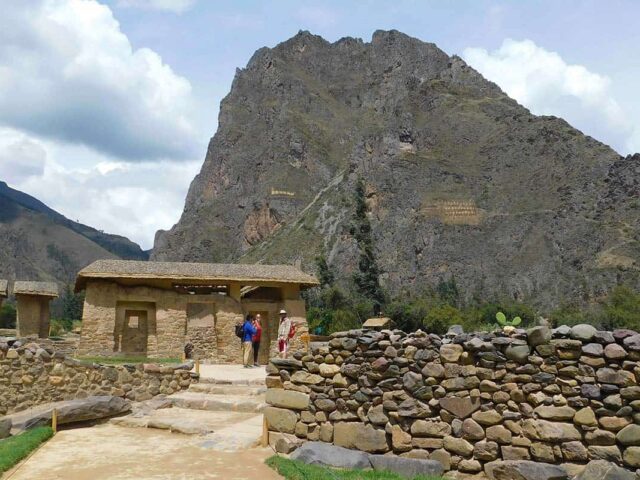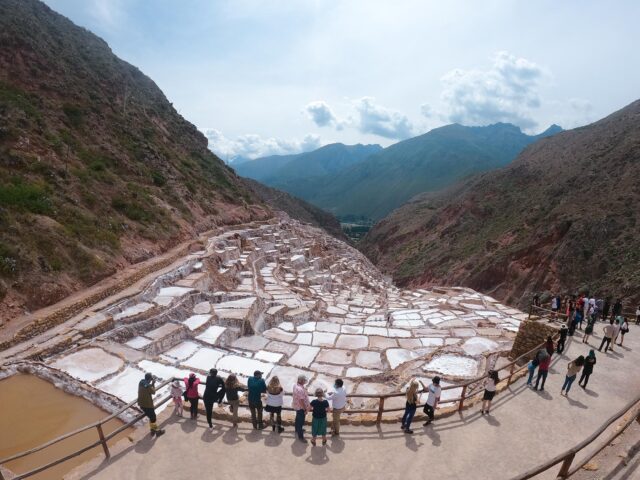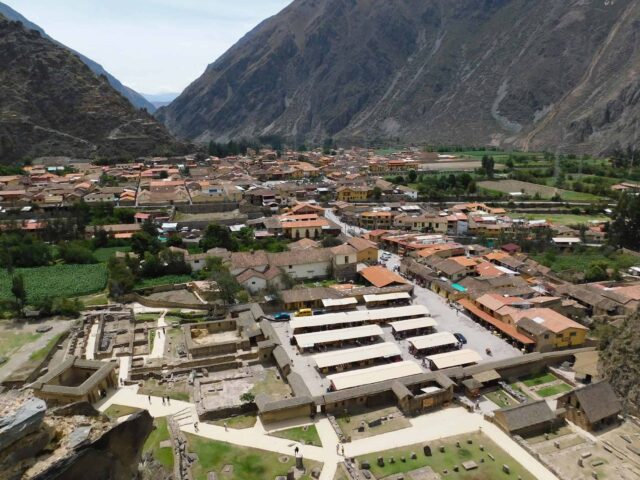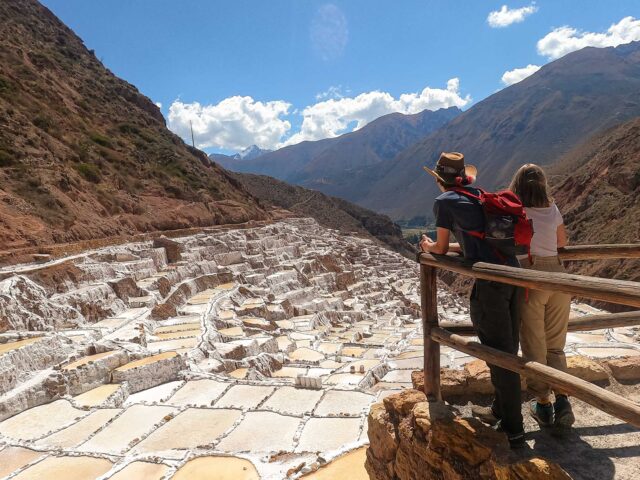
Located in the heart of Peru’s Sacred Valley, Ollantaytambo is a must-see destination for history buffs and archaeology enthusiasts, often compared to the famous ruins of Machu Picchu. The ruins of Ollantaytambo offer visitors a fascinating glimpse into the grandeur of the Inca Empire. Rich in history, culture, and natural beauty, this ancient site is a perfect blend of archaeological wonders and vibrant local life. Whether you are an independent traveler interested in self-exploration or prefer the guidance of an expert, Ollantaytambo offers an unforgettable experience.
In this article, we will guide you through the significance of the Ollantaytambo ruins and everything you need to know. In addition, we will dive into some key travel and logistics tips to make your trip as smooth and rewarding as possible.
A Guide to Visiting Ollantaytambo Ruins
Located approximately 60 kilometers (37 miles) northwest of Cuzco, Ollantaytambo lies at the western end of the Sacred Valley, at an altitude of 2,792 meters (9,160 feet).. This region was highly prized by the Incas due to its fertile farmland and temperate climate, which allowed crops to thrive throughout the year. Because of its ideal conditions, the Incas considered the area “sacred” and built temples, palaces, agricultural terraces, and defensive fortresses throughout the valley.
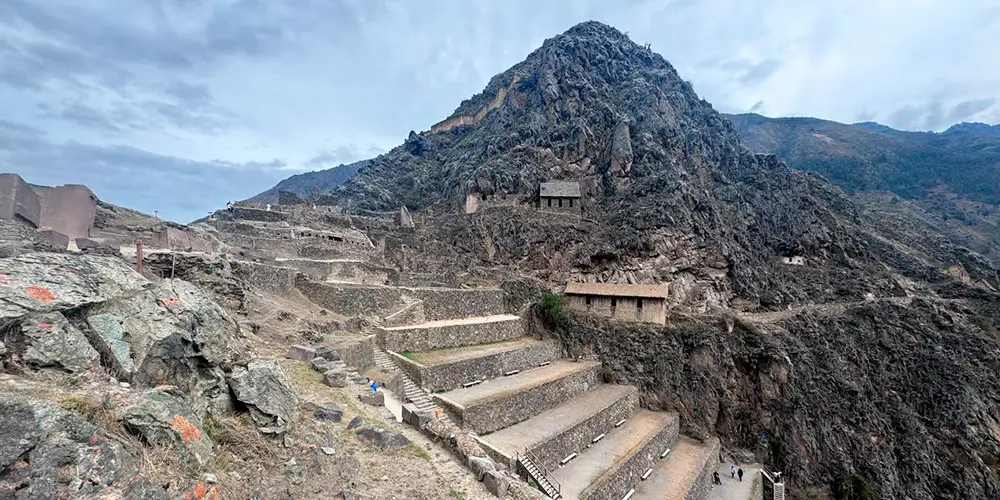
The Ruins of Ollantaytambo
Ollantaytambo played an important role in Inca society. Although many suggest that it served as an important agricultural center, producing food for the empire, the truth is that it was a ceremonial center and strategic military fortress, especially during the Spanish conquest, when Manco Inca resisted the Spanish forces here.
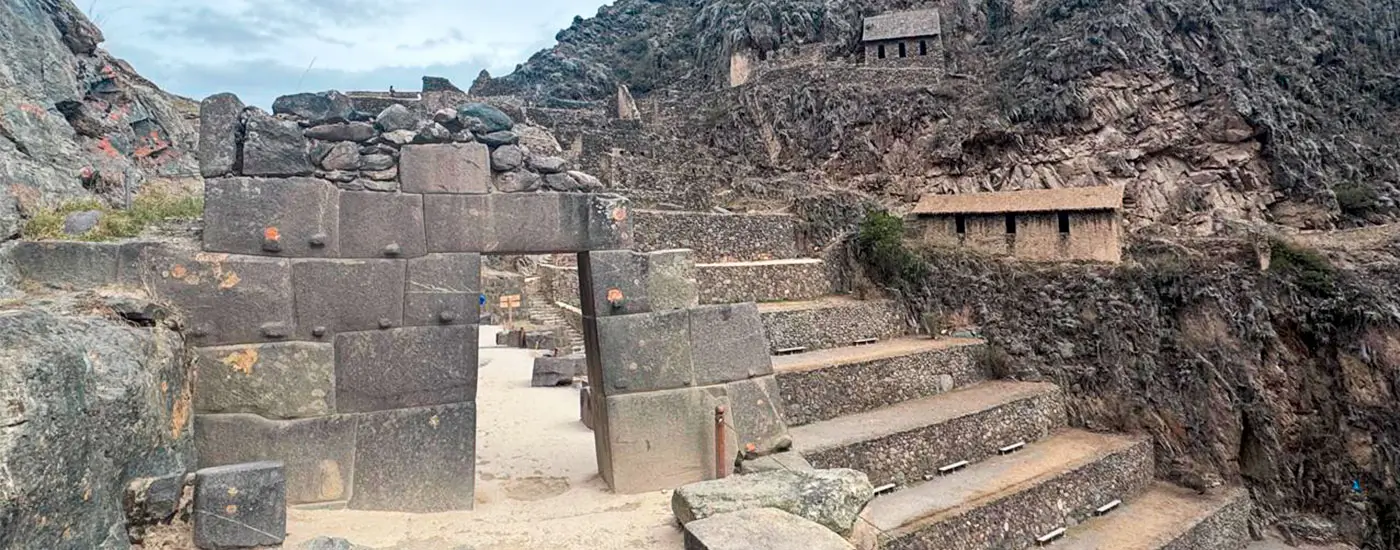
The ruins are built on the slopes of a mountain with massive, precisely carved stones that showcase the incredible mastery of the Incas in engineering and architecture.
Whether you want to explore its ancient ruins, stroll through its lively Inca streets, or take the train to Machu Picchu, Ollantaytambo is a must-see destination for anyone visiting Peru’s Sacred Valley.
Quick Tour: Must-See Spots in Ollantaytambo:
Ollantaytambo is home to some of Peru’s most impressive Inca ruins. Each site offers a unique insight into Inca history and architecture. Keep scrolling to learn more about each of these must-see locations.
- Temple of the Sun
- Wall of 10 Niches
- Pre-Inca Sector
- Inka Misana
- The Terraces
- The Inca Bathhouse
- The Fortress
- The Face of the Mountain
- The Main Plaza
- The Granaries
- The Inca Bridge
Ollantaytambo Ruins Fast Facts:
Location: Ollantaytambo, Sacred Valley, Peru.
Distance from Cusco: approximately 1.5 hours by car (72 km).
Hours: Every day from 7:00 a.m. to 5:00 p.m.
Entrance fee: Included in the Cusco Tourist Ticket (BTC) (130 soles for the full pass, 70 soles for the partial Sacred Valley pass).
Best time to visit: The dry season (May to September), but it can be visited year-round.
Recommended time for the visit: 2-3 hours for a self-guided tour.
Origin of the Name “Ollantaytambo”
The name Ollantaytambo (pronounced O-yan-tay-tombo) has roots in both the Aymara and Quechua languages, according to some scholars. The original name, believed to be “Ullanwtawi” in Aymara, means ‘lookout’ or “place to look down,” which is appropriate given the town’s location in the Sacred Valley, offering breathtaking views of the surrounding landscape.
When the Incas arrived, the name evolved into “Ullantay” in Quechua. This change is often linked to a famous Inca general named Ollantay, who led a major rebellion against the Spanish. Over time, the suffix “Tampu,” meaning “city that offers food and lodging” in Quechua, was added, reflecting the city’s role as a resting place for travelers.
Thus, Ollantaytambo combines both the historical legacy of an Inca leader and the practical function of the city as a strategic stop in the Sacred Valley.
How to visit the ruins of Ollantaytambo
Regardless of whether you are coming from Cusco or staying in Ollantaytambo, visiting the ruins is very easy and accessible. Here’s how to get to the ruins and what to expect:
How to get to the ruins of Ollantaytambo
From Cusco to Ollantaytambo:
The most common way to get to Ollantaytambo is by taxi or public bus from Cusco. The journey takes approximately an hour and a half to 2 hours depending on the traffic conditions.
You can take a public van or a private taxi from Puente Grau at Pavito street (a central point in Cusco) or directly from your hotel. A public van usually costs between 10 soles per person.
If you prefer more comfort and privacy, hiring a private taxi will cost more, but it will take you directly to your destination.
From Ollantaytambo to the ruins:
The Ollantaytambo Archaeological Park is located a short walk from the plaza of Ollantaytambo. From there, head to the market, where you will find the entrance and the ticket office.
Ruins of Ollantaytambo: What to See & Explore
The Ollantaytambo Archaeological Park is very extensive, so here are the key areas you shouldn’t miss during your visit:
1. Temple of the Sun:
The Temple of the Sun is the most important temple in Ollantaytambo that you must not miss. Located at the top of the site, it offers panoramic views of the valley that stretches out below. Although incomplete, the precision of the temple’s masonry and its alignment with the sun’s rays at key times of the year demonstrate the advanced astronomical knowledge of the Incas.
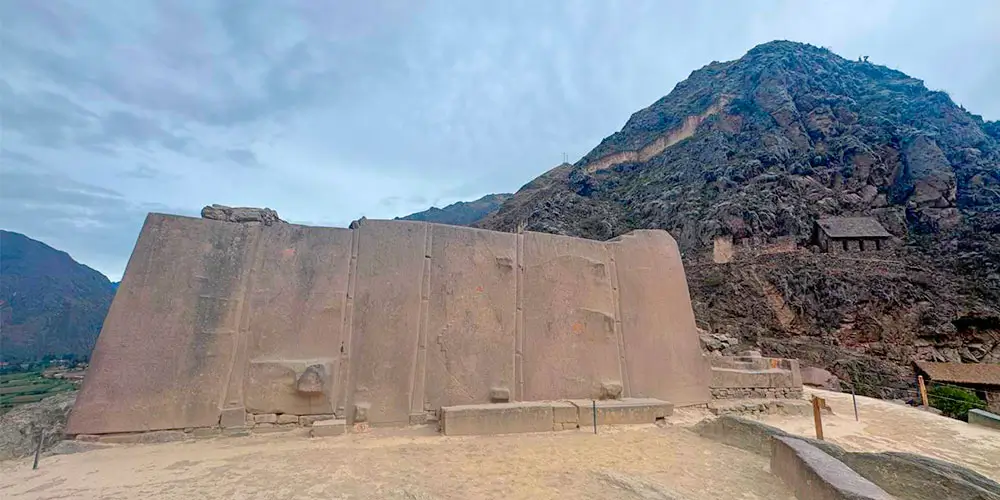
Temple of the Sun
The Temple of the Sun is believed to have been used for ceremonial rituals dedicated to the sun, and its orientation towards the sun makes it a place of special importance for understanding Inca spirituality and religious practices.
2. The wall of ten niches in Ollantaytambo:
As you approach the highest terrace in Ollantaytambo, look for a sign pointing to the left toward a small staircase leading to a large stone platform. Here you will see the wall of ten niches (Known as Diez Hornacinas), a distinctive feature of the site.
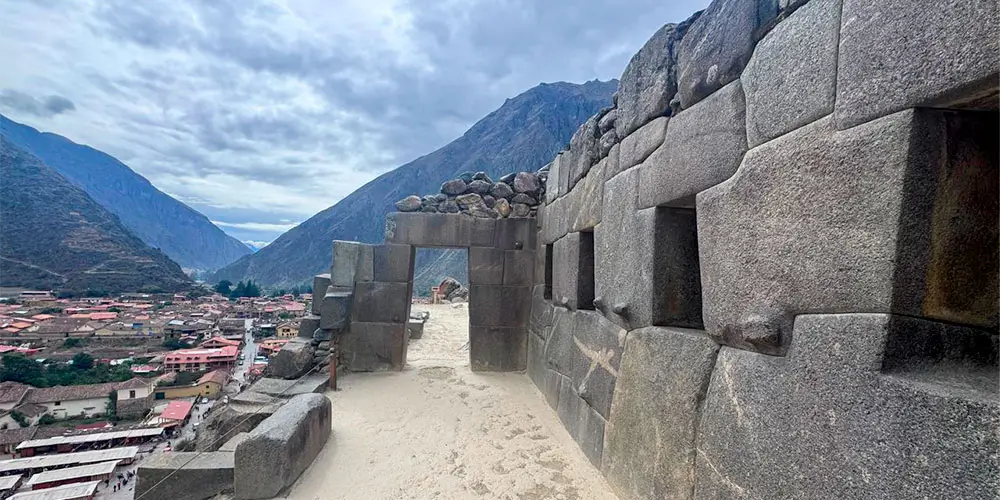
Ollantaytambo 10 Niches Temple
The wall is decorated with ten recessed niches, which may have been used for ceremonial purposes or to hold statues of deities. The precise construction of the wall and its location near the Sun Gate suggest its spiritual importance in Inca rituals.
This architectural feature highlights the advanced Inca masonry and its deep connection to ceremonial practices.
3. The Pre-Inca Sector of Ollantaytambo:
The pre-Inca sector is an important part of Ollantaytambo, as it shows the history of the area long before the Inca Empire. In this section, there are ruins built by earlier cultures, possibly the Wari or Killke civilizations, which inhabited the region before the Incas. Although there are theories that the megalithic constructions of Ollantaytambo were built by ancient civilizations with advanced technology.
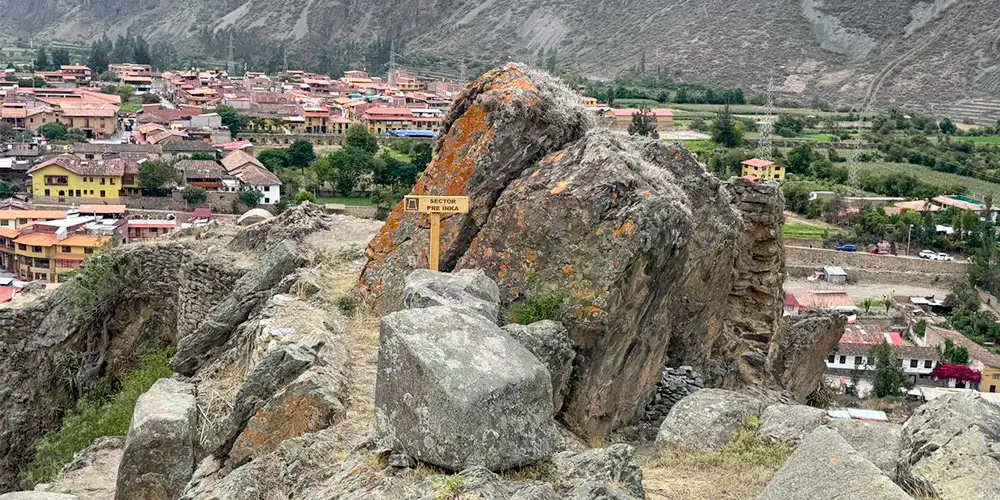
Pre Inca Sector in Ollantaytambo
You will find distinctive stone structures and terraces that differ from Inca constructions, with less precise stonework. The presence of these ancient ruins highlights the importance that Ollantaytambo has long had as a cultural and strategic site, even before the rise of the Incas.
4. Inka Misana:
Inka Misana is an important archaeological site located in Ollantaytambo, on the upper terraces. It is a complex of ceremonial structures believed to have been used by the Incas for religious or astronomical purposes. The name “Inka Misana” translates as “place of the Inca,” underscoring its importance in the Inca Empire.
The site includes finely carved stone platforms, which are believed to have been used for rituals or as a place to observe celestial events. The precise function of Inka Misana remains a mystery, but its connection to Inca spirituality and the sky is evident.
5. The Terraces at Ollantaytambo
Before reaching the Temple of the Sun, you will pass by the impressive terraces of Ollantaytambo. Unlike other terraces located on the other side, used for agriculture, these terraces were built primarily for ceremonial and symbolic purposes. They were probably used for religious events, rituals, and as platforms for gatherings, possibly to honor deities or commemorate celestial events.
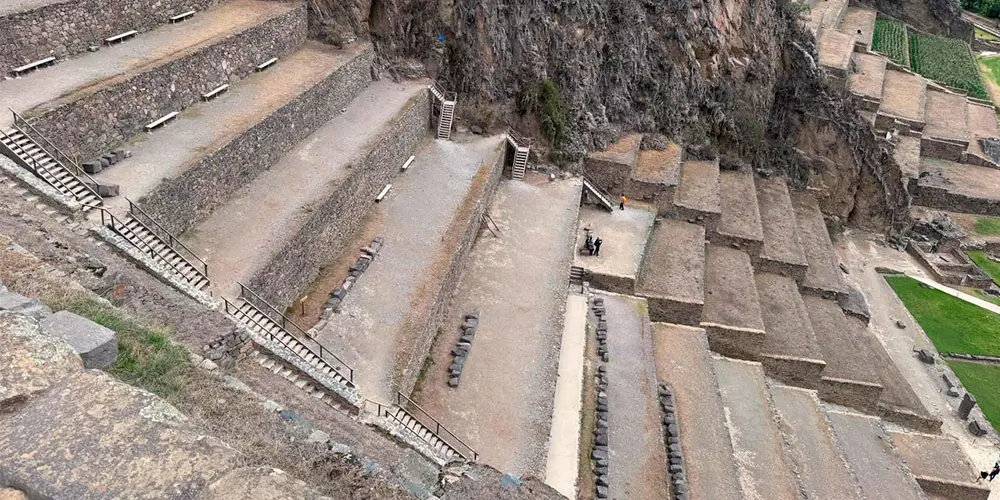
Terraces in Ollantaytambo
Built on the mountainside, the terraces offer breathtaking views of the Sacred Valley stretching out below. The precision of their masonry and the enormous size of some platforms, which rise more than 2 meters, demonstrate the advanced engineering skills of the Incas. The terraces played an important role in the spiritual and political life of the region, reinforcing the importance of Ollantaytambo as a ceremonial center.
6. The Inca Bathhouse at Ollantaytambo
Often referred to as the “Inca Baths,” this structure is best described as a temple dedicated to the ancient worship of water due to its ceremonial significance. Located near the lower terraces, the site features a series of channels, pools, and stone fountains designed to manage the flow of water, highlighting the advanced hydraulic engineering of the Incas.
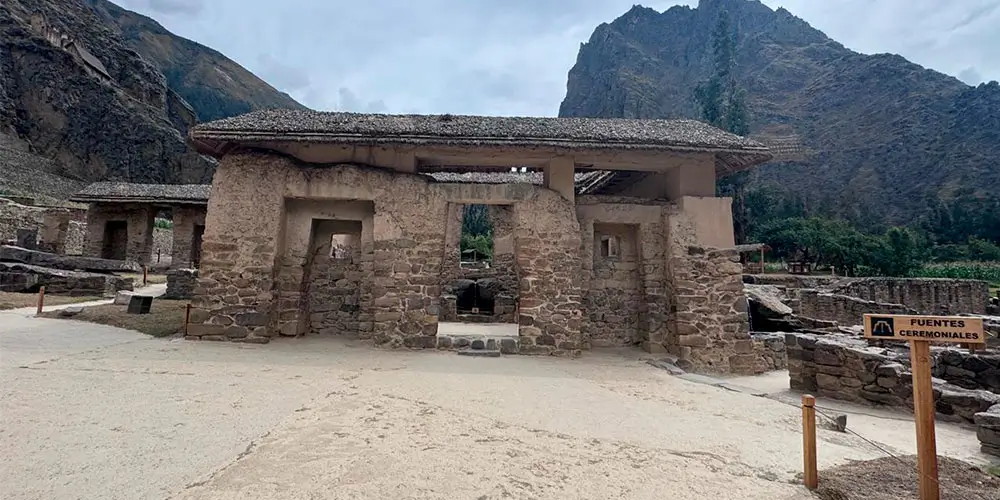
Water Temple Ollantaytambo
Rather than serving as a place for daily bathing, this temple was likely used for rituals and offerings, reflecting the Incas’ reverence for water as a sacred element. The continuous flow of water symbolized life and purification, making it an important part of ceremonial life at Ollantaytambo.
This site underscores the Incas’ deep connection to nature and their ability to integrate water into their religious practices.
7. The Face of the Mountain at Ollantaytambo
One of the most intriguing features of Ollantaytambo is the face on the Pikulluna mountain, a natural rock formation that resembles the profile of an Inca warrior. Located near the storehouses, this enormous stone figure is believed to have had spiritual or symbolic significance for the Incas.
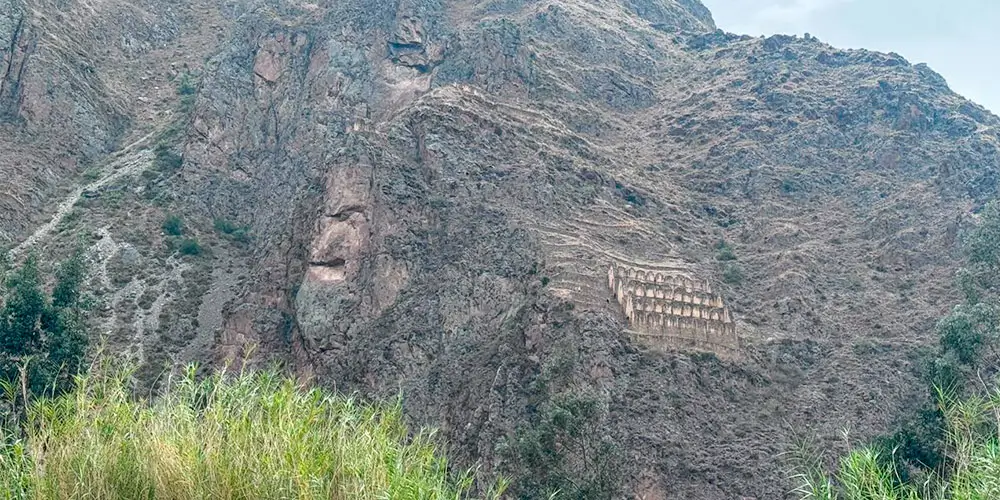
The Face of the Mountain at Ollantaytambo
Although the exact purpose of the face is not known for certain, some believe it was a representation of the Inca god Viracocha or another important deity. It is a striking example of how the Incas incorporated the natural landscape into their spiritual and ceremonial practices.
The Mountain Face adds an aura of mystery to Ollantaytambo, blending nature and Inca culture in a way that continues to captivate visitors today.
8. The Main Plaza of Ollantaytambo
The main square of the Ollantaytambo ruins is a key area within the archaeological site. Surrounded by imposing stone structures, this large open space was probably used for ceremonies and meetings. Archaeologists have discovered a series of large, finely carved stones arranged in the square, which are believed to have been brought down during the destruction of the Temple of the Sun while it was still under construction.
At one end of the plaza, you can see the Inca water channels that once supplied water to the site. The water flowed through the plaza, reflecting the Incas’ reverence for water in their daily lives and religious practices. In addition, the plaza is framed by impressive terraces, making it a focal point for spiritual and strategic activities during the Inca period.
This plaza offers a unique glimpse into the ceremonial heart of Ollantaytambo, where ancient traditions and Inca architecture come together.
9. The Pinkulluna Granaries
The granaries (or “Qolqas” in Quechua) are located on the slopes of Pinkulluna Mountain, just above Ollantaytambo. These well-preserved structures are some of the most impressive examples of Inca storage buildings, designed to keep food and other supplies safe from pests and their enemies.
The granaries are built into the mountainside in a series of small rectangular rooms, with windows providing natural ventilation with fres air. This allowed the Incas to store crops such as corn, potatoes, and quinoa in ideal conditions, preserving them for times of scarcity. The high-altitude location of the granaries also helped protect stored goods from flooding or other natural disasters.
The Pinkulluna granaries are a testament to Inca ingenuity, reflecting their advanced knowledge of agriculture and resource management. From the granaries, you can enjoy panoramic views of the Sacred Valley, making it an ideal place for both history and scenery.
10. The Military Zone at Ollantaytambo
Located above the Temple of the Sun is the military sector of Ollantaytambo, one of the most strategic and fascinating areas of the site. This zone was built to protect the Inca settlement and served as a defensive stronghold in times of conflict, especially against the Spanish conquistadors.
The zone includes, defensive walls, and a series of watchtowers that allowed the Incas to monitor and defend the surrounding valley. The site’s location on a steep hillside provided a natural advantage, offering a panoramic view of the entire Sacred Valley and making it difficult for enemies to approach unseen.
In addition to its military function, this area also served as a symbol of Inca power and authority. The precise masonry of the walls and terraces, together with the strategic location of the area, reflect the advanced military engineering skills of the Incas.
The Military Zone is an essential part of the history of Ollantaytambo not to be missed, as it offers an insight into the strategic thinking and defensive architecture of the Inca Empire.
Entrance Ticket:
To visit the ruins of Ollantaytambo, you must purchase a ticket through the Cusco Tourist Ticket (BTC), which gives you access to multiple archaeological sites in Cusco and the Sacred Valley, including the ruins of Ollantaytambo.
Ticket options:
Full BTC (covers 16 sites): S/ 130 for adults.
Partial BTC (4 sites in the Sacred Valley): S/ 70 for adults.
Note: It’s important to note that it is not possible to purchase a ticket just for the Ollantaytambo ruins.
The ruins are open daily from 7:30 a.m. to 4:30 p.m. It is recommended to arrive early to avoid the crowds.
For more details on ticket types and how to purchase them, see our guide to Ollantaytambo ruins entrance ticket.
Conclusion: The Ollantaytambo Ruins:
The Ollantaytambo Inca Ruins are one of the most impressive destinations in the Sacred Valley of the Incas and a place that every traveler should visit. This site not only offers a wonderful example of Inca engineering, but also a deep connection to the history and culture of the ancient inhabitants of the Andes.
The site stands out for its great architectural complexity, with farming terraces, temples, and a large ceremonial courtyard that, despite the centuries, still maintains its imposing beauty. In addition, the panoramic views of the valley and surrounding mountains offer a visual experience that perfectly complements the history surrounding the site.
Visiting the ruins is a unique way to immerse yourself in ancient Inca culture while enjoying one of the best archaeological sites in Peru. Whether you are interested in history, architecture, or simply the natural environment, Ollantaytambo is a destination that never ceases to amaze and captivate. Its impressive blend of history, landscape, and mystery makes it an essential stop on any itinerary in the region.